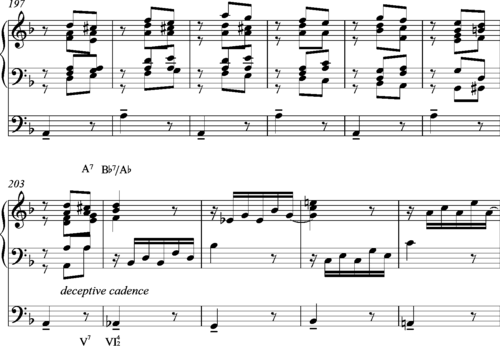
Cadence Music Theory Definition. Cadence, in music, the ending of a phrase, perceived as a rhythmic or melodic articulation or a harmonic change or all of these; Learn all about the interrupted cadence, also known as the deceptive cadence, which chords it uses and how it sounds. A cadence is any musical element or combination of musical elements, including silence, that indicates relative relaxation or relative conclusion in music. The usual definition of a plagal cadence is iv (or iv) moving to i. The 4 types of cadences with examples.
The lesson could not be displayed because javascript is disabled. In western musical theory, a cadence (latin cadentia, a falling) is, a melodic or harmonic configuration that creates a sense of repose or resolution finality or pause. a harmonic cadence is a progression of (at least) two chords that concludes a phrase, section, or piece of music. In western musical theory, a cadence (latin cadentia, a falling) is a melodic or harmonic configuration that creates a sense of resolution finality or pause. Perfect authentic, imperfect authentic, plagal, deceptive and half cadence. Multiple recent theories of classical form focus on cadences to define the structural layouts of hadyn, mozart, and beethoven.
The Period from musictheory.pugetsound.edu Multiple recent theories of classical form focus on cadences to define the structural layouts of hadyn, mozart, and beethoven. If it does, its a full cadence. This article is within the scope of wikiproject music theory, a collaborative effort to improve the coverage of music theory, theory terminology, music theorists, and musical analysis on wikipedia.if you would like to participate, please visit the project page, where you can join the discussion and see a list of open tasks. When it comes preceded by a subdominant (ii or iv degree), it is also called authentic cadence. A study of terminology and definition, journal of music theory pedagogy1 (1987): Cadence definition in music theory, a cadence is two chords which create a sense of closure, or rest to a phrase, section, or entire piece of music. You can think of a phrase as a complete musical thought with the cadence being the end of that musical thought. Chapter 7 barrons ap music theory 2nd edition by nancy scoggin learn with flashcards, games, and more — for free.
It consists of a tonic chord, a subdominant chord and a dominant chord that can or not resolve to the i straight away.
The arrival can be a dramatic moment, a simple end of phrase and anything in between. It consists of a tonic chord, a subdominant chord and a dominant chord that can or not resolve to the i straight away. A cadence is any musical element or combination of musical elements, including silence, that indicates relative relaxation or relative conclusion in music. Ann blombach, phrase and cadence: In the uk, authentic cadences are called perfect cadences, half cadences are called imperfect. The 4 types of cadences with examples. Multiple recent theories of classical form focus on cadences to define the structural layouts of hadyn, mozart, and beethoven. A classical cadential progression begins with the last chord of tonic prolongation and ends with a cadential arrival. Cadence definition in music theory, a cadence is two chords which create a sense of closure, or rest to a phrase, section, or entire piece of music. We will study the chords associated with classifying cadences, but it takes far more than a particular harmonic progression to create a cadence. In western musical theory, a cadence (latin cadentia, a falling) is a melodic or harmonic configuration that creates a sense of resolution finality or pause. Well, musical composers have a similar system. Do you want to know about the plagal cadence?
In music theory, a cadence is two chords which create a sense of closure, or rest to a phrase, section, or entire piece of music. A cadence is a point of arrival that punctuates the end of a musical unit, such as a phrase, theme, large formal section, or movement. Do you want to know about the plagal cadence? Tap card to see definition 👆. Learn all about the plagal cadence, also known as the amen cadence, which chords it uses and how it sounds.
Music Theory Boss Piano A Lesson In Cadences Artist Reach Official Website from thepactmusicsociety.files.wordpress.com Ann blombach, phrase and cadence: Rather than specifically referring to a (the) subdominant chord, it allows for a subdominant function chord, which can be a ii chord.of the sources i consulted, none includes this more. Cadential function comes at the end of a theme or phrase. (see references below.) the website takes a looser definition. It typically involves a cadential harmonic progression and a conventional, descending melodic pattern. In addition to chord progressions, cadences are affected by melodic shapes, melodic rhythm, harmonic rhythm, context, meter, and many other elements of music. In music theory, a cadence is two chords which create a sense of closure, or rest to a phrase, section, or entire piece of music. In western musical theory, a cadence (latin cadentia, a falling) is, a melodic or harmonic configuration that creates a sense of repose or resolution finality or pause. a harmonic cadence is a progression of (at least) two chords that concludes a phrase, section, or piece of music.
Put another way it's the subdominant chord (iv or iv) moving to the tonic (i).
(see references below.) the website takes a looser definition. Whether big or small, the cadence is a sense that the music reached its destination. Well, musical composers have a similar system. The lesson could not be displayed because javascript is disabled. Learn all about the interrupted cadence, also known as the deceptive cadence, which chords it uses and how it sounds. Do you want to know about the plagal cadence? Perfect authentic, imperfect authentic, plagal, deceptive and half cadence. If either of these conditions are untrue, the authentic cadence is imperfect. When it comes preceded by a subdominant (ii or iv degree), it is also called authentic cadence. A cadence is a point of arrival that punctuates the end of a musical unit, such as a phrase, theme, large formal section, or movement. A harmonic cadence is a progression of (at least) two chords that concludes a phrase, section, or piece of music. Would you like to write an interrupted. Rather than specifically referring to a (the) subdominant chord, it allows for a subdominant function chord, which can be a ii chord.of the sources i consulted, none includes this more.
A sequence of notes or chords comprising the close of a musical phrase Tap card to see definition 👆. Cadential function comes at the end of a theme or phrase. The 4 types of cadences with examples. In addition to chord progressions, cadences are affected by melodic shapes, melodic rhythm, harmonic rhythm, context, meter, and many other elements of music.
Cadence Wikipedia from upload.wikimedia.org If it does, its a full cadence. Put another way it's the subdominant chord (iv or iv) moving to the tonic (i). Ann blombach, phrase and cadence: A cadence is at once a harmonic, melodic, rhythmic, and formal event, but cadences tend to be grouped according to different ways in which harmony and melody articulate that point of arrival. In music theory, a cadence is two chords which create a sense of closure, or rest to a phrase, section, or entire piece of music. The most commonly used are: The ultimate guide to cadences in music theory: Cadences are where the harmony, rhythm, melody and other musical aspects come together to produce a sense of arrival in the music.
Perfect authentic, imperfect authentic, plagal, deceptive and half cadence.
In music theory, a cadence is two chords which create a sense of closure, or rest to a phrase, section, or entire piece of music. A study of terminology and definition, journal of music theory pedagogy1 (1987): Cadential function comes at the end of a theme or phrase. A classical cadential progression begins with the last chord of tonic prolongation and ends with a cadential arrival. If it doesnt resolve straight away and stations in the v, its a half cadence. One of the most important concepts in music theory is the concept of cadences: In western musical theory, a cadence (latin cadentia, a falling) is, a melodic or harmonic configuration that creates a sense of repose or resolution finality or pause. a harmonic cadence is a progression of (at least) two chords that concludes a phrase, section, or piece of music. Perfect authentic, imperfect authentic, plagal, deceptive and half cadence. We will study the chords associated with classifying cadences, but it takes far more than a particular harmonic progression to create a cadence. A cadence is a definitive resolution to. Whether big or small, the cadence is a sense that the music reached its destination. The cadence is the harmonic progression that serves as punctuation marks for music. If either of these conditions are untrue, the authentic cadence is imperfect.
Multiple recent theories of classical form focus on cadences to define the structural layouts of hadyn, mozart, and beethoven cadence music theory. A classical cadential progression begins with the last chord of tonic prolongation and ends with a cadential arrival.